
Agent Development & Leadership • August 19, 2026

Brian Buffini vs. Tom Ferry: Which Real Estate Coaching System Actually Works?

What working with both taught me about coaching, consistency—and why your broker matters.

Brian Buffini vs Tom Ferry is a coaching coomparison I can speak to from personal experience.  During my real estate career, I have worked with both Brian Buffini’s and Tom Ferry’s coaching organizations and I grew my business while working with each of them.

So, which coaching system works?

Both can work. But neither will do the work for you.

Two Different Approaches to Growth

Brian Buffini and Tom Ferry are two of the most recognized names in real estate coaching. Each offers a distinct approach to building a successful business.

Buffini’s coaching is widely associated with relationships, referrals and staying meaningfully connected to the people within your sphere. Ferry’s approach often emphasizes prospecting, marketing, visibility, measurable activity and accountability.

An agent may naturally connect with one style more than the other. Some agents thrive by strengthening relationships and building a referral-based business. Others gain energy from prospecting, creating content, tracking their activity and developing a larger public presence.

I found value in both.

More importantly, each experience helped me understand something that applies to nearly every coaching system: the program can provide the ideas, structure and direction, but growth only happens when the agent consistently puts those ideas into practice.

Coaching Is Not the Same as Doing

Attending a conference can be exciting. A coaching call can leave you motivated. A new business plan can make you feel as though you are finally ready to change everything.

But feeling motivated is not the same as doing the work.

Buying a coaching program doesn’t build a database. Listening to a podcast doesn’t create a relationship. Downloading a social media calendar doesn’t make the posts appear. Writing a business plan doesn’t generate a transaction.

Those resources can be valuable, but only when they lead to action.

The work is usually much less dramatic:

  • Make the call.
  • Send the note.
  • Follow up with the potential client.
  • Have the real estate conversation.
  • Create the post.
  • Practice the presentation.
  • Update the database.
  • Learn the technology.
  • Repeat the process tomorrow.

None of those actions alone is likely to transform an agent’s business overnight. Together, however, they begin to create something much more valuable: a system.

Small Steps Become a Business System

Successful real estate businesses are rarely built through one big breakthrough. They are built through small actions completed consistently over time.

One follow-up becomes a routine. The routine becomes a habit. The habit creates a pipeline. The pipeline eventually produces more predictable business.

This is where many agents get stuck. They try to implement an entire coaching program at once. They make an aggressive list of everything they intend to change, become overwhelmed and then move on to the next promising idea before the first one has had enough time to work.

Growth does not require doing everything at once. It requires identifying the next useful step, completing it and then repeating it until it becomes part of the way you conduct your business.

The system doesn’t have to be complicated. In fact, the systems agents actually use are usually the simplest ones.

Real estate agents participating in a brokerage training and coaching sessionWhy Your Broker Matters

This leads to another part of the conversation that agents sometimes overlook: the brokerage they choose can have a significant effect on their ability to grow.

A coaching company may introduce an idea, but your broker and company are part of the environment in which you must implement it.

Do you have someone who can help you decide which ideas make sense for your business and local market? Is there training that moves beyond theory and into practical application? Are there tools available to support the strategy? Is there accountability after the initial excitement wears off? Can you get guidance when a plan isn’t working as expected?

The right brokerage cannot guarantee an agent’s success. It can, however, make growth more achievable by providing opportunities, leadership, resources and support.

Today, as a Sales Director with Better Homes and Gardens Real Estate The Masiello Group, I see this from a different perspective. Our company offers agents opportunities to develop their businesses through training, technology, marketing resources, experienced leadership and ongoing support.

But opportunity and execution are not the same thing.

A company can provide the tools. A sales director can help an agent establish priorities, create a practical plan and remain accountable. A broker can offer guidance through the challenges that inevitably arise.

The agent must still engage.

That means making the call, attend the training, learn the system, follow up with the client and complete the next small step.

The Best System Is the One You Will Use

The real question isn’t whether Brian Buffini or Tom Ferry has the better coaching system. Both have helped many agents build successful careers, and I personally gained value from working with both organizations.

The better question is this:

Which principles are you willing to implement consistently?

Agents do not necessarily need more ideas. Most already know several things they could do to improve their businesses. What they often need is help narrowing those ideas into manageable actions—and the discipline to continue after the initial motivation fades.

Your coach may provide the playbook.

Your brokerage may provide the opportunities, tools and support.

But ultimately, you still have to run the plays.

Real growth happens when good coaching, the right brokerage environment and an agent’s willingness to do the work come together—one small, consistent step at a time.

What Is the Next Small Step in Your Business?

If you are an agent who wants to grow but feels overwhelmed by all the things you could be doing, start by identifying one action you can complete consistently.

And if you’re wondering whether your current brokerage is providing the guidance, tools and accountability you need to turn those actions into a sustainable system, perhaps it’s time for a conversation.

I’m always willing to talk with agents about where they are, where they want to go and what may be standing between the two. No pressure and no rehearsed recruiting presentation—just an honest conversation about your business and the opportunities available at Better Homes and Gardens Real Estate The Masiello Group.

Growth begins with one small step. A conversation may be yours.
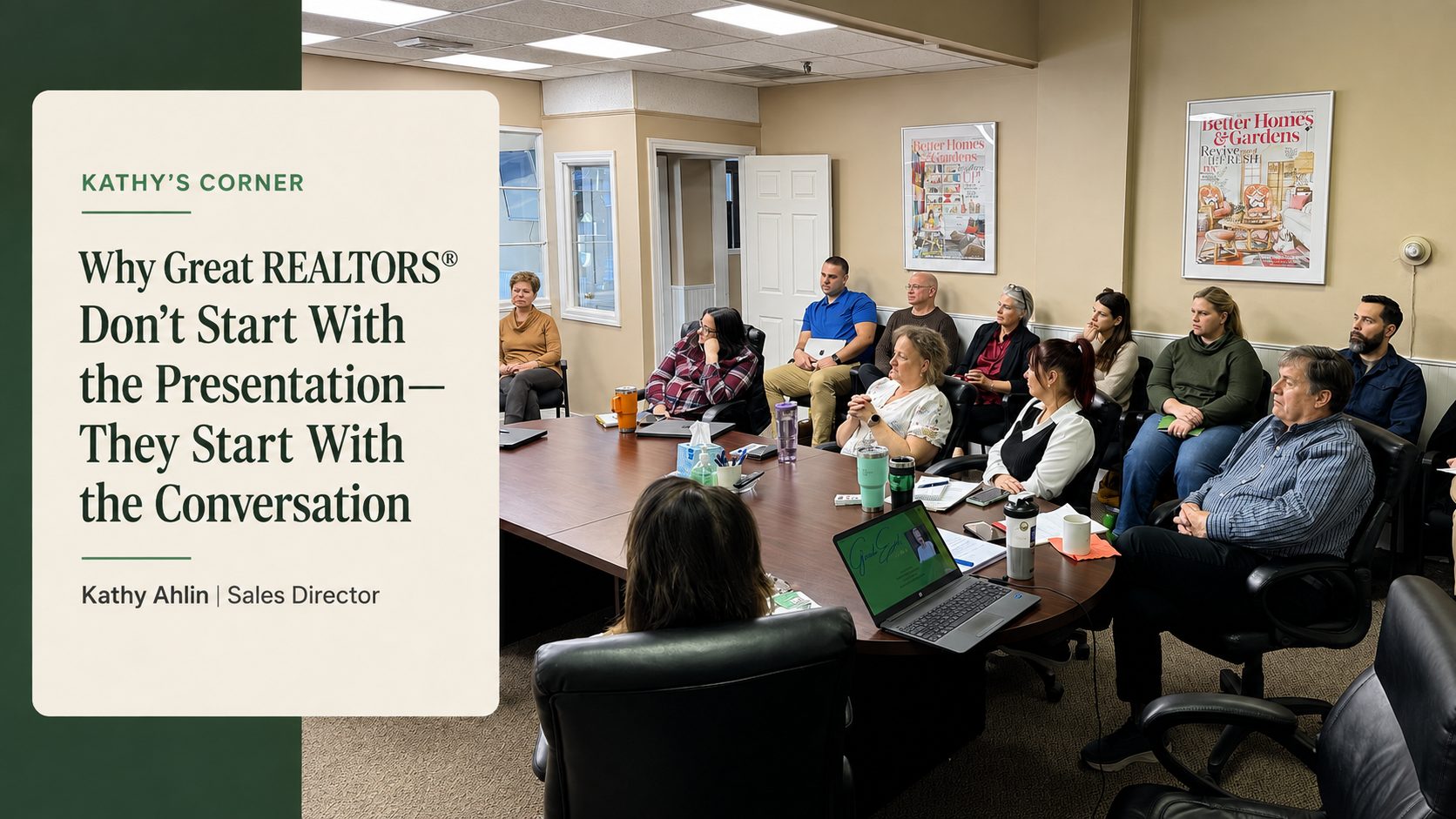
 

Agent Development & Leadership • August 10, 2026

Why Great REALTORS® Don’t Start With the Presentation—They Start With the Conversation

Real estate professionals spend a great deal of time preparing presentations. We organize market statistics, build marketing plans, rehearse talking points and make sure we can explain every service we provide.

Preparation matters. But the strongest presentation in the world will fall flat if it answers questions the client was never asking.

Great REALTORS® understand that their first responsibility is not to present. It is to understand.

The most productive buyer consultations, listing appointments and recruiting meetings begin with a genuine conversation. Before offering a solution, the professional takes time to learn about the person sitting across from them—their goals, concerns, expectations and definition of a successful outcome.

Presence Comes Before the Process

Clients begin forming an impression before the formal conversation even starts.

They notice whether we arrive prepared and on time. They notice whether we are calm, attentive and fully present. They can also tell when we are distracted, rushing or thinking ahead to what we want to say next.

Professional presence is not about having a perfect script. It comes from preparation, experience and the confidence to focus on the person in front of us.

When we are comfortable in our role, we do not need to prove our value immediately. We can slow down, listen and allow trust to develop naturally.

Establish Direction Without Taking Over

Every successful meeting benefits from a clear purpose.

At the beginning of a conversation, I like to understand what the other person hopes to accomplish. A simple question can provide that direction:

“What would you like to make sure we cover today?”

The answer tells us what matters most to the client. It also allows us to explain what we would like to discuss and agree on how the conversation will proceed.

This is not about controlling people. It is about creating structure.

When everyone understands the purpose of the meeting, the conversation becomes more focused and productive. The client knows their questions will be addressed, and the REALTOR® has permission to explore the information needed to offer meaningful advice.

Discovery Makes the Advice Relevant

Many real estate professionals are eager to demonstrate what they know. That instinct is understandable. Clients expect expertise, and we want them to feel confident in our ability to help.

The problem occurs when we begin offering answers before we understand the situation.

A seller may say that obtaining the highest possible price is the priority, but further conversation may reveal that timing is equally important. A buyer may begin with a particular location in mind, but their daily commute, monthly payment or family needs may point toward different possibilities.

Good discovery goes beyond collecting basic facts. It helps us understand:

  • What is the client trying to accomplish?
  • Why is this move important now?
  • What concerns could prevent them from moving forward?
  • What financial considerations are involved?
  • Who else will participate in the decision?
  • What would a successful result look like to them?

These questions are not a checklist to rush through. They are an invitation for the client to tell us what we need to know to serve them well.

Let People Hear Their Own Priorities

Listening is only part of the process. We also need to confirm that we understood correctly.

After hearing the client’s story, summarize it in plain language:

“Let me make sure I understand what is most important to you.”

Then reflect the client’s goals, concerns, timing and priorities back to them.

This simple step is powerful. It gives the client an opportunity to correct or clarify something, and it demonstrates that the conversation has truly been about them.

It can also help clients hear their own priorities more clearly. Real estate decisions often involve competing emotions and practical considerations. A thoughtful summary can turn a collection of concerns into a more manageable path forward.

Present the Solution They Need

Only after we understand the situation should we begin presenting recommendations.

At that point, the presentation becomes more relevant because it is connected directly to what the client has told us.

Instead of explaining every service we offer, we can focus on the services that address their needs. Instead of delivering a generic marketing presentation, we can show how the pricing, preparation and launch strategy supports their goals. Instead of walking every buyer through the same process, we can emphasize the steps that matter most in their particular situation.

The presentation is still important. It is simply more effective when it follows discovery.

Clients do not need to hear everything we know. They need to understand what applies to them, what we recommend and why it matters.

Confidence Comes From Preparation and Relevance

Confidence in a client conversation should never feel like pressure.

True professional confidence comes from knowing the market, understanding the process and being prepared to make a clear recommendation. It also comes from knowing that the recommendation is based on what the client has shared.

When clients sense that we understand both the market and their circumstances, our advice carries more weight.

That does not mean clients will always agree immediately. Questions and concerns are a normal part of important decisions. When an objection arises, we can return to discovery:

“Thank you for bringing that up. Tell me more about what concerns you.”

An objection is often not a rejection. It may simply be information we did not uncover earlier.

The Close Should Be the Next Logical Step

Closing should not feel like an abrupt change in tone at the end of the meeting.

If the conversation has been thoughtful, the next step should feel like a natural continuation of the work already completed together.

That step might be signing a listing agreement, connecting with a lender, scheduling a home consultation or setting another meeting. Not every conversation ends with an immediate commitment to work together, but every productive conversation should end with clarity.

Before leaving, confirm:

  • What happens next?
  • Who is responsible for each action?
  • When will the next conversation occur?

Momentum is easily lost when the next step is vague. Clear follow-through shows professionalism and keeps everyone moving in the same direction.

Scripts Are Tools—Conversation Is the Skill

Scripts can be useful. They help newer agents practice difficult questions, prepare for common concerns and develop confidence.

But a script should support a conversation, not replace one.

Clients know when someone is waiting for an opportunity to deliver the next rehearsed line. They also know when a professional is genuinely listening and responding to what they said.

The goal is not to memorize the perfect presentation. The goal is to develop the awareness and communication skills needed to guide many different people through many different circumstances.

That is the real work of becoming a trusted advisor.

The Bottom Line

Great REALTORS® prepare thoroughly, but they do not begin by proving how much they know.

They begin by understanding the person in front of them.

They create a comfortable environment, establish direction, ask thoughtful questions and listen carefully. They confirm what they heard before recommending a solution. Then they guide the client toward a clear and appropriate next step.

Presentations still have a place in real estate. They are simply more powerful when they are built around the conversation—not when the conversation is forced to fit the presentation.

Our clients do not need more information delivered at them. They need professionals who can help them sort through that information, understand their options and make confident decisions.

That begins with a conversation.

About Kathy Ahlin

Kathy Ahlin is an experienced New Hampshire real estate broker and Sales Director with Better Homes and Gardens Real Estate The Masiello Group. With more than 15 years in the industry, Kathy helps buyers, sellers and real estate professionals make confident decisions through clear communication, thoughtful strategy and strong market knowledge.

Kathy was named New Hampshire REALTOR® of the Year in 2021 and is a Lifetime Member of the New Hampshire Association of REALTORS® Honor Society. She has also served in numerous local and statewide REALTOR® leadership positions.

Home Selling Advice • August 7, 2026

Why Do Some Homes Sell Over Asking While Others Require Price Reductions?

You may still hear about homes selling over asking price—and they absolutely do. More often than not, however, that result is not accidental. It is the outcome of accurate pricing, thoughtful preparation, strong marketing and a strategy designed to create buyer competition.

At the same time, other homes enter the market at an optimistic price, receive limited interest and eventually require one or more price reductions.

What causes such different outcomes?

The short answer is that buyers respond to value—not a seller’s expectations, financial needs or memories of what neighboring homes sold for several years ago.

Seller Expectations and the Current Market

One of the biggest challenges facing sellers today is the gap between what they expect and what the current market will support.

Many sellers remember the extraordinary conditions of the pandemic-era market:

  • Multiple offers within days
  • Buyers waiving inspections
  • Homes selling well above asking price
  • Very limited competition
  • Buyers making aggressive decisions because they feared missing out

Those conditions shaped expectations, but the market has continued to evolve.

Buyers today are more selective. They are paying closer attention to condition, location, monthly payments and overall value. Higher borrowing costs have also reduced how far many buyers can comfortably stretch.

A home can still sell quickly and for an excellent price, but sellers cannot automatically rely on the conditions that existed several years ago.

Selling Over Asking Usually Begins With the Right Asking Price

A sale over asking does not necessarily mean the seller received more than the home was worth.

In many cases, it means the home was positioned at a price that attracted several qualified buyers at the same time.

When buyers recognize value, they are more likely to:

  • Schedule showings promptly
  • Attend an open house
  • Make an offer
  • Compete with other buyers
  • Improve their price or terms

That competition can push the final sale price above the original asking price.

This is often the result of an educated REALTOR®’s pricing strategy—not evidence that the home should have been listed at the eventual sale price from the beginning.

A strategically priced home creates urgency. An overpriced home often creates hesitation.

Why Some Homes Require Price Reductions

Homes generally require price reductions when the market does not agree with the original asking price.

The market communicates through buyer behavior:

  • Strong activity and multiple offers suggest the home is positioned well.
  • Showings without offers may indicate that buyers see value concerns.
  • Very few showings often suggest the price is preventing buyers from considering the property at all.

Sellers sometimes believe they should “start high and leave room to negotiate.” The problem is that buyers do not always negotiate with an overpriced listing. They may simply move on to another home that appears to offer better value.

By the time the price is reduced, the listing may have lost some of its initial momentum.

A price reduction can correct the problem, but it cannot recreate the excitement of a well-positioned new listing.

Price Is Important, but It Is Not the Only Factor

Pricing is central to the result, but buyers evaluate the entire property.

Several factors influence whether a home attracts immediate competition:

Condition

A well-maintained home gives buyers confidence. Visible repairs, deferred maintenance or dated features can cause buyers to calculate additional costs and reduce what they are willing to pay.

Presentation

Professional photography, thoughtful staging and a clean, uncluttered presentation help buyers understand the home’s value before they ever schedule a showing.

Marketing and Exposure

Strong marketing should place the property in front of the largest appropriate audience. Buyers cannot compete for a home they never see.

Accessibility

Limited showing availability can reduce activity. When buyers have difficulty seeing a property, they may purchase another home first.

Location and Competition

Every home competes with the other available choices in its price range. Buyers compare location, condition, size, amenities and cost.

Timing

Market conditions can vary by season, community and price range. A strategy that works for one property may not be appropriate for another.

Traditional Nashua New Hampshire home with landscaped front lawn

The First Days on the Market Matter

A new listing usually receives its greatest level of attention during its initial days on the market.

Qualified buyers are already watching for new inventory. When the right property appears at a compelling price, they act.

That early exposure is valuable. It should not be used to test a price that is unsupported by the market.

Starting too high can result in fewer showings, longer market time and eventual reductions. Starting at a market-supported price gives the seller a better opportunity to create urgency and competition while buyer attention is at its highest.

The Highest Asking Price Is Not Always the Best Strategy

When interviewing real estate professionals, sellers may be tempted to choose the person who recommends the highest listing price.

A higher suggested price can sound like a better result, but the number only matters if buyers are willing to support it.

A strong pricing recommendation should be based on:

  • Recent comparable sales
  • Current competing listings
  • Properties that failed to sell
  • Local buyer demand
  • The home’s condition and features
  • Current financing conditions
  • The seller’s timeline and priorities

The goal is not to choose the highest number presented during an appointment. The goal is to choose the strategy most likely to produce the strongest overall outcome.

What Should Sellers Do?

Before placing a home on the market, sellers should ask their real estate professional:

  1. What are buyers purchasing in this price range?
  2. Which homes are we competing against?
  3. What happened to similar homes that started too high?
  4. How will we position the property to create immediate interest?
  5. How will we evaluate buyer response after the home is listed?
  6. When would you recommend adjusting the strategy?

The best pricing conversations are honest, specific and supported by current market evidence.

The Bottom Line

Homes selling over asking price and homes requiring price reductions are not necessarily operating in two different markets.

They may simply have entered the same market with two very different strategies.

A home that is accurately priced, properly prepared and professionally marketed can create competition. A home priced around expectations rather than buyer behavior may spend valuable time waiting for the market to catch up.

Pricing is not about choosing the largest number.

It is about creating the strongest possible position for the seller from the moment the home reaches the market.


ABOUT KATHY AHLIN

Kathy Ahlin is an experienced New Hampshire real estate broker and Sales Director with Better Homes and Gardens Real Estate The Masiello Group. With more than 15 years in the industry, Kathy helps buyers, sellers, and real estate professionals make confident decisions through clear communication, thoughtful strategy, and strong market knowledge.

Kathy was honored as New Hampshire’s REALTOR® of the Year in 2021 and is a Lifetime Member of the New Hampshire Association of REALTORS® Honor Society. She has also served in numerous local and statewide REALTOR® leadership positions.

Thinking about buying or selling a home in Central New Hampshire? Kathy welcomes the opportunity to answer your questions, provide trusted market guidance, and help you make confident real estate decisions.

Kathy Ahlin, Sales Director
Office: (603) 228-0151
Direct: (603) 520-2286
Email: kathyahlin@masiello.com
Website: kathyahlin.masiello.com
NH Real Estate License #063930