
 Facebook
 X
X
 Pinterest
 Copy Link
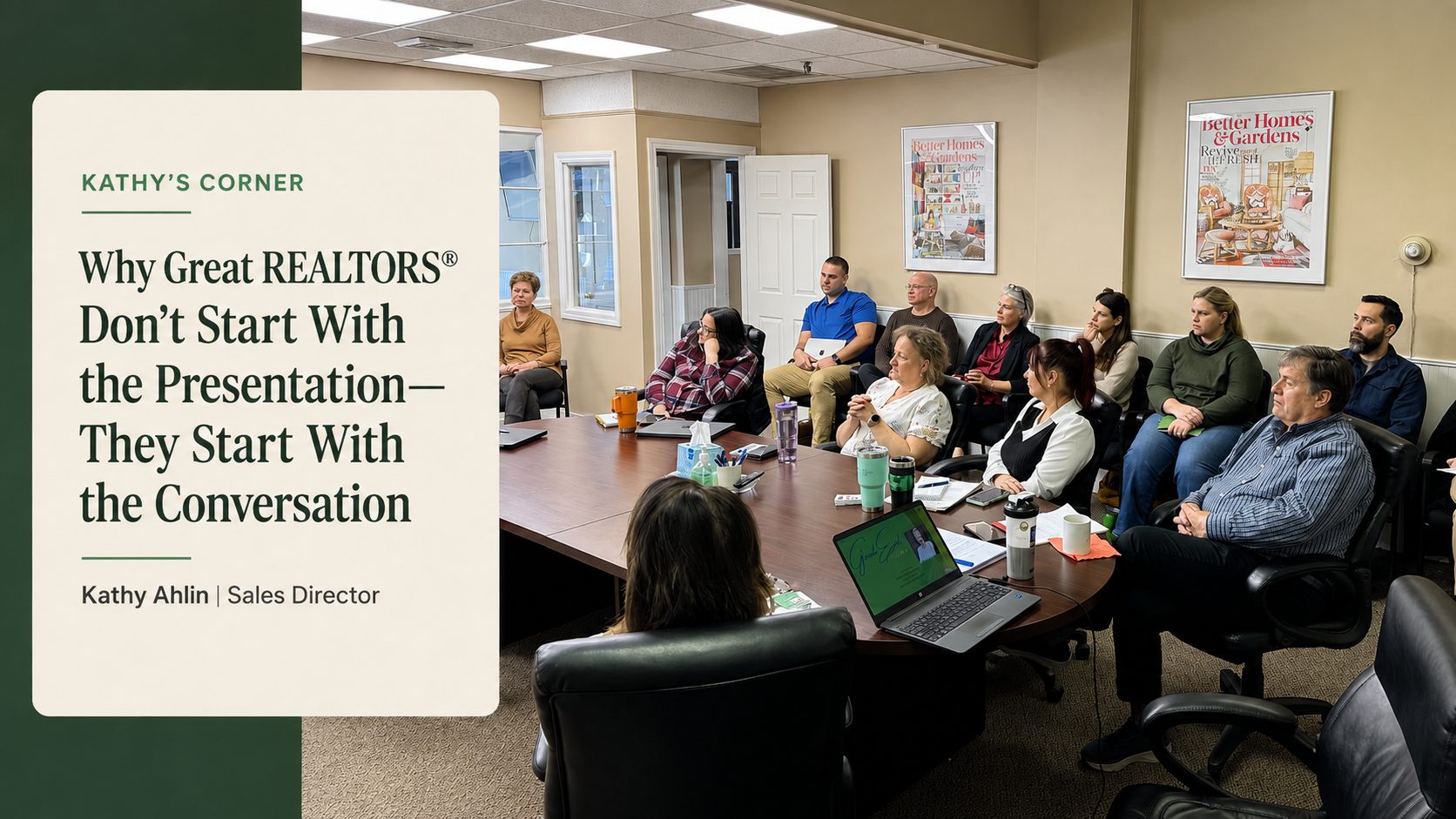
Real estate professionals spend a great deal of time preparing presentations. We organize market statistics, build marketing plans, rehearse talking points and make sure we can explain every service we provide.
Preparation matters. But the strongest presentation in the world will fall flat if it answers questions the client was never asking.
Great REALTORS® understand that their first responsibility is not to present. It is to understand.
The most productive buyer consultations, listing appointments and recruiting meetings begin with a genuine conversation. Before offering a solution, the professional takes time to learn about the person sitting across from them—their goals, concerns, expectations and definition of a successful outcome.
Presence Comes Before the Process
Clients begin forming an impression before the formal conversation even starts.
They notice whether we arrive prepared and on time. They notice whether we are calm, attentive and fully present. They can also tell when we are distracted, rushing or thinking ahead to what we want to say next.
Professional presence is not about having a perfect script. It comes from preparation, experience and the confidence to focus on the person in front of us.
When we are comfortable in our role, we do not need to prove our value immediately. We can slow down, listen and allow trust to develop naturally.
Establish Direction Without Taking Over
Every successful meeting benefits from a clear purpose.
At the beginning of a conversation, I like to understand what the other person hopes to accomplish. A simple question can provide that direction:
“What would you like to make sure we cover today?”
The answer tells us what matters most to the client. It also allows us to explain what we would like to discuss and agree on how the conversation will proceed.
This is not about controlling people. It is about creating structure.
When everyone understands the purpose of the meeting, the conversation becomes more focused and productive. The client knows their questions will be addressed, and the REALTOR® has permission to explore the information needed to offer meaningful advice.
Discovery Makes the Advice Relevant
Many real estate professionals are eager to demonstrate what they know. That instinct is understandable. Clients expect expertise, and we want them to feel confident in our ability to help.
The problem occurs when we begin offering answers before we understand the situation.
A seller may say that obtaining the highest possible price is the priority, but further conversation may reveal that timing is equally important. A buyer may begin with a particular location in mind, but their daily commute, monthly payment or family needs may point toward different possibilities.
Good discovery goes beyond collecting basic facts. It helps us understand:
- What is the client trying to accomplish?
- Why is this move important now?
- What concerns could prevent them from moving forward?
- What financial considerations are involved?
- Who else will participate in the decision?
- What would a successful result look like to them?
These questions are not a checklist to rush through. They are an invitation for the client to tell us what we need to know to serve them well.
Let People Hear Their Own Priorities
Listening is only part of the process. We also need to confirm that we understood correctly.
After hearing the client’s story, summarize it in plain language:
“Let me make sure I understand what is most important to you.”
Then reflect the client’s goals, concerns, timing and priorities back to them.
This simple step is powerful. It gives the client an opportunity to correct or clarify something, and it demonstrates that the conversation has truly been about them.
It can also help clients hear their own priorities more clearly. Real estate decisions often involve competing emotions and practical considerations. A thoughtful summary can turn a collection of concerns into a more manageable path forward.
Present the Solution They Need
Only after we understand the situation should we begin presenting recommendations.
At that point, the presentation becomes more relevant because it is connected directly to what the client has told us.
Instead of explaining every service we offer, we can focus on the services that address their needs. Instead of delivering a generic marketing presentation, we can show how the pricing, preparation and launch strategy supports their goals. Instead of walking every buyer through the same process, we can emphasize the steps that matter most in their particular situation.
The presentation is still important. It is simply more effective when it follows discovery.
Clients do not need to hear everything we know. They need to understand what applies to them, what we recommend and why it matters.
Confidence Comes From Preparation and Relevance
Confidence in a client conversation should never feel like pressure.
True professional confidence comes from knowing the market, understanding the process and being prepared to make a clear recommendation. It also comes from knowing that the recommendation is based on what the client has shared.
When clients sense that we understand both the market and their circumstances, our advice carries more weight.
That does not mean clients will always agree immediately. Questions and concerns are a normal part of important decisions. When an objection arises, we can return to discovery:
“Thank you for bringing that up. Tell me more about what concerns you.”
An objection is often not a rejection. It may simply be information we did not uncover earlier.
The Close Should Be the Next Logical Step
Closing should not feel like an abrupt change in tone at the end of the meeting.
If the conversation has been thoughtful, the next step should feel like a natural continuation of the work already completed together.
That step might be signing a listing agreement, connecting with a lender, scheduling a home consultation or setting another meeting. Not every conversation ends with an immediate commitment to work together, but every productive conversation should end with clarity.
Before leaving, confirm:
- What happens next?
- Who is responsible for each action?
- When will the next conversation occur?
Momentum is easily lost when the next step is vague. Clear follow-through shows professionalism and keeps everyone moving in the same direction.
Scripts Are Tools—Conversation Is the Skill
Scripts can be useful. They help newer agents practice difficult questions, prepare for common concerns and develop confidence.
But a script should support a conversation, not replace one.
Clients know when someone is waiting for an opportunity to deliver the next rehearsed line. They also know when a professional is genuinely listening and responding to what they said.
The goal is not to memorize the perfect presentation. The goal is to develop the awareness and communication skills needed to guide many different people through many different circumstances.
That is the real work of becoming a trusted advisor.
The Bottom Line
Great REALTORS® prepare thoroughly, but they do not begin by proving how much they know.
They begin by understanding the person in front of them.
They create a comfortable environment, establish direction, ask thoughtful questions and listen carefully. They confirm what they heard before recommending a solution. Then they guide the client toward a clear and appropriate next step.
Presentations still have a place in real estate. They are simply more powerful when they are built around the conversation—not when the conversation is forced to fit the presentation.
Our clients do not need more information delivered at them. They need professionals who can help them sort through that information, understand their options and make confident decisions.
That begins with a conversation.
About Kathy Ahlin
Kathy Ahlin is an experienced New Hampshire real estate broker and Sales Director with Better Homes and Gardens Real Estate The Masiello Group. With more than 15 years in the industry, Kathy helps buyers, sellers and real estate professionals make confident decisions through clear communication, thoughtful strategy and strong market knowledge.
Kathy was named New Hampshire REALTOR® of the Year in 2021 and is a Lifetime Member of the New Hampshire Association of REALTORS® Honor Society. She has also served in numerous local and statewide REALTOR® leadership positions.


